
Car Insurance After Dropping a Second Car — North Carolina
Free to compare
Your Premium Stayed High After You Dropped the Car
You sold the car you stopped driving two years ago, called your carrier to remove it from the policy, and expected a meaningful drop at renewal. Instead your premium fell $18 per month while your neighbor who made the same change saved $90. You confirmed the vehicle came off. You confirmed your coverage stayed the same. The bill still feels wrong.
The disconnect is structural. North Carolina does not require carriers to offer a mature-driver or low-mileage discount, so your eligibility for voluntary programs resets every time your household profile changes. When you dropped from two cars to one, your carrier recalculated your discount tier. The multi-car discount disappeared. If you never enrolled in a mileage program or submitted a defensive-driving course certificate, you landed in the single-vehicle base tier with none of the offsets a retiree driving 6,000 miles annually qualifies for.
“When you dropped from two cars to one, your carrier recalculated your discount tier and you landed in the base single-vehicle rate unless you had already enrolled in mileage or mature-driver programs.”

Keep Your North Carolina Coverage Right for Retirement
Get My North Carolina Retiree Auto Insurance Quote19
Carriers Writing in North Carolina
State Farm, Geico, Progressive, Nationwide, Allstate, Travelers, Liberty Mutual, Hartford, Farmers, Erie, National General, Dairyland, The General, Direct Auto, USAA, Amica, Auto-Owners, Auto Club Enterprises, and Automobile Club of Michigan all write policies here. Not all offer mature-driver or low-mileage programs; you compare which do before renewal.
Carrier data per North Carolina Department of Insurance licensing records
Why the Multi-Car Discount Masks Everything Else
A multi-car discount applies to both vehicles on the policy. When you remove one, the discount vanishes from the remaining car. The premium drop you see reflects only the removed vehicle's portion minus the lost discount allocation. If the removed car was older, lower-value, or carried liability-only while your remaining vehicle carries full coverage, you may see almost no savings because the higher-coverage vehicle now absorbs the full single-car base rate.
North Carolina law does not mandate a mature-driver discount. Carriers file voluntary programs with varying eligibility rules. Some tie the discount to age alone. Others require completion of a state-approved defensive driving course every three years. A third group offers both: a smaller age-based reduction and a larger course-completion benefit. When your household profile changed, your carrier re-evaluated which voluntary programs you qualified for. If you never enrolled, you forfeited eligibility the moment the multi-car discount fell away.
The timing compounds the problem. Most carriers recalculate discount tiers at renewal, not mid-term when you remove the vehicle. You called in January. Your renewal lands in May. The vehicle came off your declarations page in January, but the discount recalculation waits until May. You paid four months at the old blended rate, then saw the structural reset all at once when the renewal notice arrived.
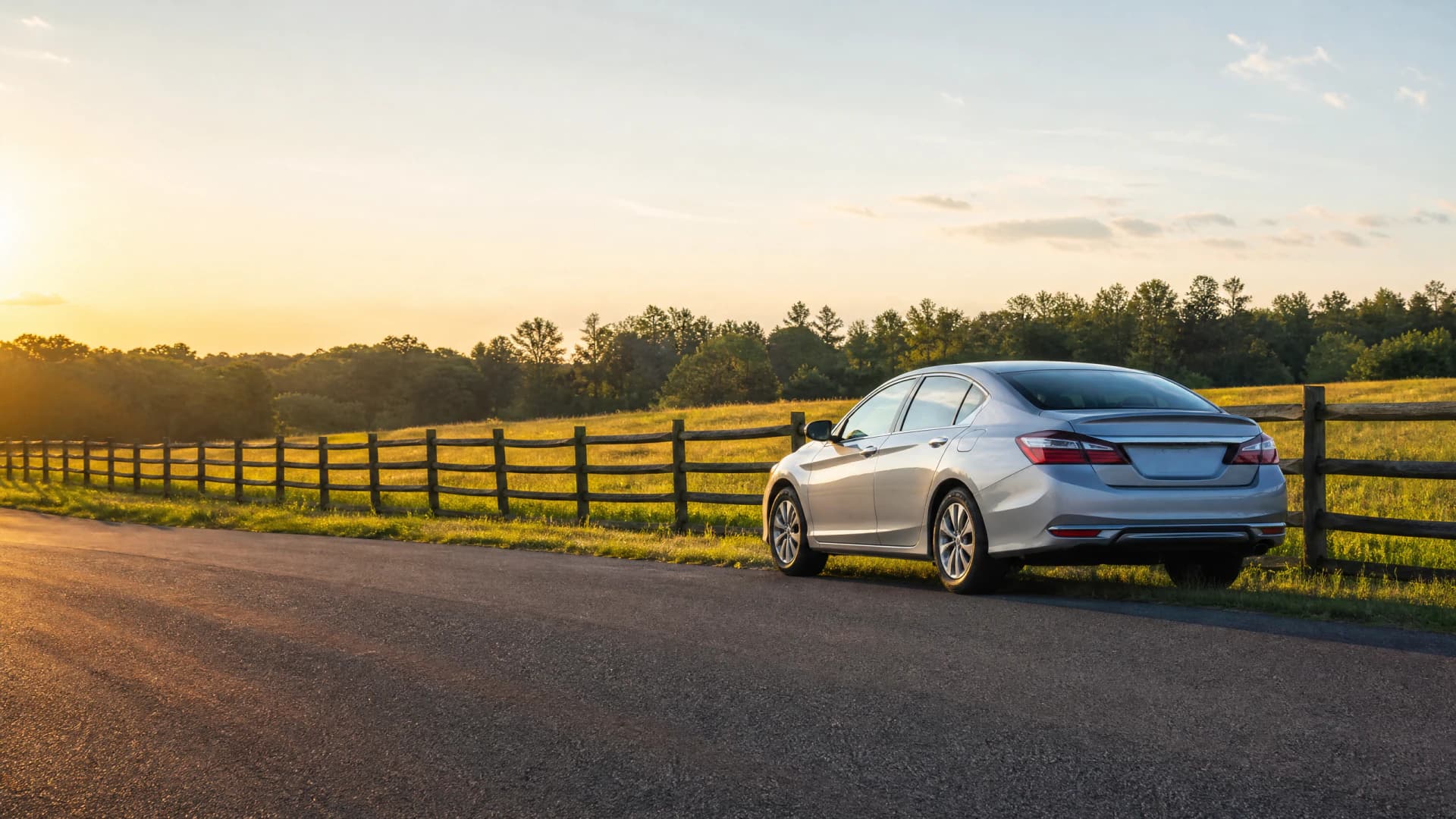
Your carrier recalculated your discount tier when you dropped to one vehicle. If you never enrolled in low-mileage or mature-driver programs, you landed in the base single-vehicle rate with no offsets.
Related Articles

Car Insurance After Dropping Second Car NC
6/15/2026

Car Insurance After Dropping Second Car Cary NC
6/15/2026

Car Insurance After Dropping a Second Car
6/15/2026

Car Insurance After Dropping Second Car
6/15/2026

Car Insurance After Dropping Second Car
6/15/2026

Durham NC Retiree Insurance After Dropping Car
6/15/2026

How Paid-Off Vehicle Age Changes the Calculation
Your remaining car is twelve years old and paid off. You kept collision and comprehensive coverage because the multi-car discount made the incremental cost feel reasonable. Now that the discount is gone, collision and comprehensive together cost $47 per month on a vehicle worth $4,200. That is $564 annually to insure against damage to an asset you could replace for under $5,000.
The conventional threshold: if annual collision and comprehensive premiums exceed ten percent of the vehicle's current value, you are paying insurance costs that approach self-insurance over a three-year window. A $4,200 vehicle at $564 per year crosses that line. Dropping to liability-only eliminates collision and comprehensive, leaves your legal minimums intact, and redirects $564 annually toward replacement savings or other household priorities. This is a judgment call about your own asset, not a coverage rule.
If you decide to keep full coverage, raise your deductible. Increasing your collision deductible from $500 to $1,000 typically reduces premium by 15 to 25 percent, though the exact figure varies by carrier and is confirmed at quote time. A higher deductible trades a larger out-of-pocket cost at claim time for a lower monthly bill. On a paid-off vehicle you can afford to replace, that trade frequently makes sense.
$50,000
NC Bodily Injury Minimum Per Person
North Carolina requires $50,000 per person, $100,000 per accident bodily injury liability, and $50,000 property damage. Retirees with home equity or retirement assets above these limits face exposure in an at-fault accident; increasing liability coverage to $100,000/$300,000 or $250,000/$500,000 costs substantially less than the asset risk.
N.C. Gen. Stat. § 20-279.21

Comparing Carriers Who Write Senior Profiles Well
Your current carrier may not offer the programs you now need. State Farm, Geico, Progressive, Nationwide, and Erie all write in North Carolina and offer some combination of mature-driver, low-mileage, or usage-based programs, but eligibility rules differ. State Farm applies a mature-driver discount at age 55 with completion of a defensive driving course. Progressive offers Snapshot for mileage tracking. Nationwide offers SmartMiles with per-mile pricing. Not every carrier offers both; you compare which combination fits your actual profile.
Request quotes from at least three carriers. Provide your current coverage limits, your annual mileage estimate, your age, and whether you have completed a defensive driving course in the past three years. Ask each carrier to quote both your current coverage structure and a liability-only alternative if your vehicle is paid off. The quote process surfaces which voluntary programs each carrier applies and what documentation they require. Some apply the mature-driver discount automatically when you meet the age threshold. Others require you to submit course completion certificates at every renewal. The requirement determines how much administrative friction you accept in exchange for the rate.
Get Competing Quotes Before Your Renewal Date
Your renewal notice arrives thirty days before your policy renews. That is the window in which you compare, decide, and bind new coverage if switching carriers makes sense. Missing the renewal date does not lock you in permanently, but switching mid-term after renewal frequently triggers a short-rate cancellation penalty from your outgoing carrier, and your new carrier may prorate coverage start based on the date you bind rather than the date your old policy renews. Timing the switch to your renewal date avoids both.
Confirm your current mileage. Check your odometer reading from last year's renewal and your current reading. Divide the difference by twelve to get your monthly average. If the number is under 625 miles per month, you drive fewer than 7,500 miles annually and likely qualify for a low-mileage program. If it is under 415 miles per month, you are under 5,000 annually and qualify for the deepest mileage-based tiers. Do not estimate generously; your actual mileage is the figure the program uses, and overstating it costs you the reduction you qualify for.
What You Confirm Before Renewal Arrives
Ask whether the carrier offers a low-mileage program and what annual threshold qualifies. Progressive Snapshot, Nationwide SmartMiles, Allstate Milewise, and similar programs reduce your rate when you drive fewer miles than the tier assumes. Retirees who no longer commute frequently qualify. The program requires either a mileage declaration at quote time or a telematics device tracking actual miles. If your current carrier does not offer one and you drive under 7,500 miles annually, that alone justifies comparing carriers who do.
Ask whether the carrier offers a mature-driver or defensive-driving discount, what age or course triggers it, and whether you need to re-enroll at each renewal. North Carolina does not require this discount by law; it is a voluntary carrier filing. Some apply it automatically at age 55 or 65. Others require you to complete an approved course and submit the certificate. A third group applies a small age-based reduction automatically but increases it significantly when you complete the course. If your current carrier requires the course and you never submitted one, you have been paying the higher rate since your last birthday. Confirm the requirement, complete the course if needed, and submit the certificate before renewal.
Get Your Free Quote
Get My North Carolina Retiree Auto Insurance QuoteFrequently Asked Questions
Why did my car insurance barely drop after I removed a second vehicle in North Carolina?
The multi-car discount that applied to both vehicles disappeared when you dropped to one, and North Carolina does not require carriers to offer a mature-driver or low-mileage discount. Your carrier recalculated your tier at renewal. If you never enrolled in voluntary mileage or course-based programs, you landed in the single-vehicle base rate with no offsets.
Does North Carolina require a senior discount on car insurance?
No. North Carolina law does not mandate a mature-driver or senior discount. Carriers file voluntary programs with varying age thresholds and course requirements. You compare which carriers offer one and what documentation they require before choosing coverage.
Should I keep full coverage on a paid-off car after dropping my second vehicle?
If annual collision and comprehensive premiums exceed ten percent of your vehicle's current value, you are approaching self-insurance cost over a three-year window. A twelve-year-old car worth $4,200 with $564 annual collision and comprehensive cost crosses that threshold. Dropping to liability-only or raising your deductible redirects premium toward replacement savings or other priorities.
What mileage qualifies for a low-mileage discount in North Carolina?
Thresholds vary by carrier. Progressive Snapshot and Nationwide SmartMiles typically offer reductions under 7,500 annual miles, with deeper tiers under 5,000 miles. Confirm your actual annual mileage from odometer readings before quoting; overstating it forfeits the reduction you qualify for.
Can I switch car insurance carriers after my renewal if I missed the deadline?
Yes, but switching mid-term after renewal frequently triggers a short-rate cancellation penalty from your outgoing carrier, and your new carrier may prorate coverage based on the bind date rather than your old renewal date. Switching at renewal avoids both penalties.
How do I compare car insurance carriers for a single-car household in North Carolina?
Request quotes from at least three carriers writing in North Carolina. Provide your current coverage limits, annual mileage, age, and whether you completed a defensive driving course recently. Ask each to quote your current coverage and a liability-only alternative. The quote process surfaces which mature-driver and low-mileage programs each applies and what documentation they require.