
Car Insurance After Dropping a Second Car — Cary, NC
Free to compare
You Dropped the Car but the Premium Stayed High
You sold the second vehicle last month. You called your carrier, confirmed the removal, and expected your next premium to drop by roughly what you had been paying to insure that car. Instead, the new bill arrived within $30 of the old one — sometimes higher. The agent mentioned something about multi-car discounts, but the math made no sense.
North Carolina retirees dropping a second car after decades of two-vehicle households face a structural quirk most carriers never explain upfront: the multi-car discount you lose when you drop to one vehicle frequently exceeds the marginal premium you were paying on the removed car. The result is a net premium reduction far smaller than you expected, or in some cases, a net increase when the loss of the discount combines with an age-bracket or claims-history recalculation on the remaining vehicle. This article walks the actual math, names the carriers in North Carolina that structure senior and low-mileage discounts to offset the multi-car loss, and sequences the comparison step before you finalize the removal.
“The multi-car discount you lose on the vehicle you keep often exceeds the marginal premium you paid on the vehicle you remove.”

Keep Your North Carolina Coverage Right for Retirement
Get My North Carolina Retiree Auto Insurance Quote25
Carriers Writing in NC
Nineteen major carriers write auto policies in North Carolina, including preferred-tier options offering mature-driver and low-mileage programs that can recapture multi-car discount losses for retirees driving one paid-off vehicle under 7,500 miles annually. Carrier structure varies sharply; comparison before removal prevents locking into a high single-vehicle rate.
North Carolina Department of Insurance licensure records
Multi-Car Discounts Work Backward From What You Expect
Most households assume the multi-car discount reduces the premium on the second vehicle. The actual mechanism runs the opposite direction: the discount reduces the base premium on both vehicles, often by 15 to 25 percent per car depending on the carrier. When you drop to one vehicle, you lose the discount on the vehicle that remains. The marginal cost you were paying on the removed car was already discounted; what you lose is the discount on the car you keep.
A worked example clarifies the structure. Assume your two-vehicle household paid $1,200 annually total, split $700 for the primary vehicle and $500 for the second. Those figures already reflect a 20 percent multi-car discount applied to both. Without the discount, the primary vehicle's base premium might have been $875, and the second vehicle $625 — totaling $1,500 before the discount brought it to $1,200. When you remove the second car, you lose the $625 marginal cost but also lose the $175 discount on the primary vehicle. Your new single-vehicle premium is $875, not the $700 you were paying before. The net reduction is $325, not the $500 you expected.
Carriers filing rates in North Carolina through the NC Rate Bureau structure multi-car discounts differently. Some apply a flat percentage to each vehicle; others apply tiered discounts that increase with the third and fourth vehicle but offer minimal benefit on a two-car household. The discount's value is opaque until you model the removal, and most agents will not run that comparison unless you ask explicitly.
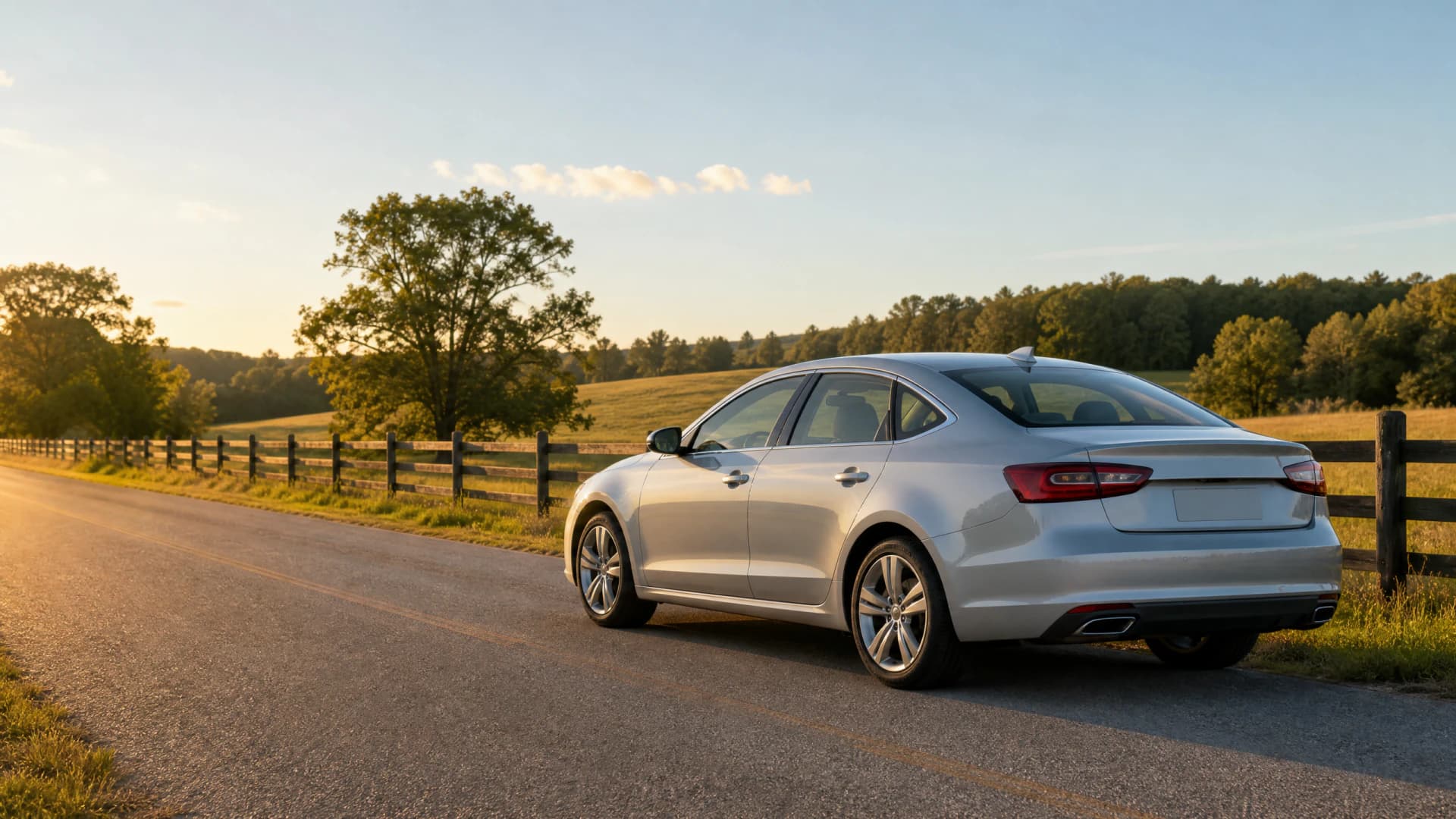
The multi-car discount you lose on the vehicle you keep frequently exceeds the marginal premium you paid on the vehicle you remove. Ask your carrier to quote both scenarios before finalizing the sale.
Related Articles

Car Insurance After Dropping Second Car NC
6/15/2026

Car Insurance After Dropping Second Car NC
6/15/2026

Car Insurance After Dropping a Second Car
6/15/2026

Car Insurance After Dropping Second Car
6/15/2026

Durham NC Retiree Insurance After Dropping Car
6/15/2026

Dropping Second Car Impact on Premium
6/15/2026

State Minimum Coverage and the Paid-Off Vehicle Decision
North Carolina requires $50,000 bodily injury per person, $100,000 per accident, and $50,000 property damage. Uninsured motorist coverage is mandatory. These minimums apply regardless of vehicle count. When you drop to one vehicle, the liability floor does not change, but the collision and comprehensive decision does.
A paid-off vehicle of moderate age driven fewer than 7,500 miles annually shifts the full-coverage calculation. Collision pays to repair your vehicle after an at-fault accident; comprehensive covers theft, weather, and non-collision damage. Both carry deductibles, commonly $500 or $1,000. If your remaining vehicle's actual cash value sits below $5,000 and you drive it infrequently, the annual cost of collision and comprehensive may exceed the maximum payout you would receive after the deductible. Dropping both and banking the premium difference creates a self-insurance reserve many retirees prefer once the loan is paid and replacement cost is manageable.
Medical payments coverage and personal injury protection interact with Medicare in ways your agent may not clarify. North Carolina does not require PIP. Medical payments coverage pays medical bills after an accident regardless of fault, but Medicare remains the primary payer for drivers 65 and older. Ask your carrier whether med-pay coordinates with Medicare or pays secondary; if it pays secondary and your out-of-pocket exposure under Medicare is low, the coverage may duplicate benefits you already hold. This becomes a sharper question on a single-vehicle policy where every dollar of premium earns scrutiny.
$50,000
NC Bodily Injury Minimum Per Person
North Carolina's $50,000 per-person and $100,000 per-accident liability minimums are the floor, not the ceiling. Retirees with retirement accounts, home equity, or other assets exposed in an at-fault accident frequently carry $250,000/$500,000 or higher. The single-vehicle transition is the moment to reassess whether your liability limits match your asset profile, not merely whether you meet the state floor.
N.C. General Statutes Chapter 20

Defensive Driving Courses and Mature-Driver Discounts
North Carolina does not require insurers to offer a mature-driver or defensive-driving-course discount. Carriers file discounts voluntarily, and the percentage, eligibility age, and course-approval rules vary by carrier. Some carriers offer an age-based discount starting at 55 or 65 with no course required; others require completion of a state-approved defensive driving program and apply the discount only after you submit the certificate.
The discount typically renews every three years, aligned with the course certificate's expiration. If you completed a course four years ago and never re-enrolled, the discount has lapsed and your carrier will not reapply it automatically at renewal. The renewal notice will not flag the lapse; you must track the certificate date and re-enroll before it expires. When you drop to one vehicle and lose the multi-car discount, confirming that your mature-driver discount is current and applied becomes the first recovery step.
Ask your current carrier which defensive driving courses it approves, whether the discount applies to drivers 65 and older without a course, and whether the discount percentage changes when you drop to one vehicle. Some carriers reduce the discount amount on single-vehicle policies; others hold it constant. If your carrier reduces it, compare against carriers that apply the full mature-driver discount regardless of vehicle count.
Low-Mileage and Usage-Based Programs for Retirees
Retirees no longer commuting often drive 40 to 60 percent fewer miles than they did during working years. Carriers offering low-mileage tiers or usage-based programs reduce premiums when annual mileage falls below a threshold, commonly 7,500 or 10,000 miles. The reduction can offset or exceed the multi-car discount loss on a single-vehicle policy, but enrollment is not automatic; you must request it and in some cases install a telematics device or authorize mileage monitoring through a mobile app.
GEICO, Progressive, Nationwide, and State Farm offer usage-based programs in North Carolina. Eligibility, monitoring method, and discount structure differ. Some programs offer an upfront participation discount plus a variable discount based on measured mileage and driving behavior; others apply the discount only after the monitoring period ends and actual mileage is confirmed. Ask whether the program monitors mileage only or also tracks braking, speed, and time-of-day; some retirees prefer mileage-only programs to avoid behavior scoring.
If you drive fewer than 7,500 miles annually and your current carrier does not offer a low-mileage program, switching to one that does often produces a lower single-vehicle rate than staying with a carrier that structures discounts around vehicle count. The comparison step sequences naturally here: request the low-mileage quote before you remove the second vehicle, confirm the net premium including all applicable discounts, and switch before finalizing the sale if the new rate justifies it.

Compare Now and Lock the Rate Before Selling
The worst outcome is selling the second car, notifying your carrier, and discovering two weeks later that your premium dropped $30 per month when you expected $50. At that point the vehicle is gone, the new owner holds the title, and you have lost negotiating position. The correct sequence runs the opposite direction: compare carriers while you still hold both vehicles, request binding quotes for the single-vehicle scenario, and lock the new rate before you finalize the sale. If the current carrier's single-vehicle rate is not competitive, switch carriers first, then remove the vehicle from the new policy within the first billing cycle.
Request quotes from at least two carriers offering mature-driver and low-mileage discounts. Provide your current coverage limits, deductibles, and annual mileage estimate. Ask explicitly whether the quote includes all discounts you qualify for — mature-driver, low-mileage, defensive driving course completion, and any others the carrier files. Confirm that the quote reflects a single-vehicle policy and that removing the second vehicle will not trigger a rate recalculation after binding. Get the quote in writing with an effective date you control.
Once you hold two or three binding quotes, compare the single-vehicle premium against what you currently pay for two vehicles minus the marginal cost of the removed car. If the current carrier's rate is competitive and includes the discounts you need, stay and remove the vehicle. If a competitor's rate is $400 or more lower annually, switch first. The friction of switching — updating payment methods, printing new cards, notifying your lienholder if one remains — is justified when the annual savings exceeds the hour of administrative work. North Carolina retirees driving paid-off vehicles under 7,500 miles annually frequently save $500 to $800 per year by switching from a multi-car-discount carrier to a mature-driver and low-mileage specialist after dropping the second vehicle.
Compare Before You Remove the Vehicle
Call your current carrier and request a renewal quote reflecting one vehicle only, with all current discounts reapplied where eligible. Ask explicitly whether a mature-driver discount or defensive-driving-course discount offsets the multi-car loss, and whether a low-mileage or usage-based program applies to a retiree driving under 7,500 miles annually. Request the quote in writing. Do not rely on an agent's verbal estimate; the written projection locks the structure and gives you a comparison baseline.
North Carolina does not mandate a mature-driver or course-completion discount; carriers offer them voluntarily and file discount percentages independently. State Farm, GEICO, Progressive, Nationwide, and Farmers write in North Carolina and offer mature-driver programs, but eligibility age, course requirements, and discount amounts vary by carrier. Compare which carriers in your area offer both a mature-driver discount and a low-mileage tier, and whether the combined value exceeds your current multi-car benefit. If your current carrier structures its discount around household vehicle count rather than driver profile, switching to a carrier emphasizing mileage and experience often produces a lower single-vehicle rate even before removing the second car.
Get Your Free Quote
Get My North Carolina Retiree Auto Insurance QuoteFrequently Asked Questions
Will my car insurance premium drop in half when I sell my second car?
No. The multi-car discount you lose on the remaining vehicle often exceeds the marginal premium you paid on the removed car, so the net reduction is much smaller than expected. Request a single-vehicle quote from your carrier before selling to see the actual post-removal premium.
Does North Carolina require a senior discount on car insurance?
No. North Carolina does not mandate a mature-driver or course-completion discount; insurers offer them voluntarily. Discount percentages, eligibility ages, and course requirements vary by carrier, so compare which carriers in your area offer the discount and at what amount.
Should I keep full coverage on my paid-off car after dropping the second vehicle?
If your vehicle's actual cash value is below $5,000 and you drive it fewer than 7,500 miles annually, the annual cost of collision and comprehensive may exceed the maximum payout after the deductible. Many retirees drop both and self-insure once the loan is paid and replacement cost is manageable.
Do low-mileage programs apply to retirees who no longer commute?
Yes. Carriers offering low-mileage or usage-based programs reduce premiums when annual mileage falls below a threshold, commonly 7,500 or 10,000 miles. GEICO, Progressive, Nationwide, and State Farm offer such programs in North Carolina, but you must request enrollment; it is not automatic.
Can I switch carriers after I have already removed the second car?
Yes, but you lose negotiating position. The better sequence is to request binding single-vehicle quotes from two or three carriers before selling, compare rates, and switch carriers first if a competitor offers a lower premium. Then remove the vehicle from the new policy within the first billing cycle.