
Car Insurance After Dropping a Second Car — Wilmington, NC
Free to compare
Why Your Premium Didn't Drop When You Sold the Second Car
You just removed your second vehicle from your North Carolina auto insurance policy. You expected a meaningful drop in your premium—half the cars, something close to half the cost. Instead, your renewal notice shows a reduction of maybe $30 or $40 per month, and in some cases the bill actually increased. That isn't a clerical mistake. It reflects how multi-car discounts work and why dropping a vehicle doesn't produce the savings most retirees assume it will.
When you insured two vehicles, your carrier applied a multi-car discount to both—typically 10 to 25 percent off each vehicle's base premium. The moment you drop one car, that discount disappears from the remaining vehicle. The result: the remaining car's premium jumps back to its undiscounted rate, offsetting most of the savings from removing the second vehicle's coverage. You're no longer paying for two cars, but you're also no longer getting the discount that made insuring two cars cheaper per vehicle than insuring one.
“The multi-car discount reduced each vehicle's rate; losing one car removes the discount from the one that remains, erasing most of the expected savings.”

Keep Your North Carolina Coverage Right for Retirement
Get My North Carolina Retiree Auto Insurance Quote$50,000
NC Bodily Injury Minimum Per Person
North Carolina requires $50,000 bodily injury per person, $100,000 per accident, and $50,000 property damage as the legal floor. Retirees with retirement assets exposed in an at-fault accident often carry higher limits than the minimum, making the coverage-fit decision on the remaining vehicle critical.
N.C.G.S. Chapter 20, Financial Responsibility Requirements
What the Multi-Car Discount Actually Discounted
Multi-car discounts reduce the per-vehicle premium when you insure more than one car on the same policy. The discount applies to each vehicle individually, not to the total policy cost. A household insuring two $800-per-year vehicles at a 15 percent multi-car discount pays roughly $1,360 annually—$680 per car. Drop one vehicle and you're left with one car at $800, not $680. The $480 savings you expected turns into $560 in actual cost reduction, and the remaining vehicle's premium increased by $120 compared to what you were paying for it under the two-car arrangement.
Some carriers structure the discount asymmetrically, applying a larger percentage to the secondary vehicle and a smaller one to the primary. In those cases, dropping the secondary vehicle removes the larger discount and leaves you with the smaller one on the primary, further narrowing the savings. That structure makes sense when both cars stay on the policy—it rewards insuring more vehicles—but it punishes the household that consolidates down to one.
The multi-car discount also bundled other efficiencies: one policy fee, one renewal cycle, one agent relationship. Dropping to a single vehicle removes those efficiencies without removing the fixed costs embedded in the policy. The result is a per-vehicle cost structure that looks worse than it did when you were splitting those costs across two cars.
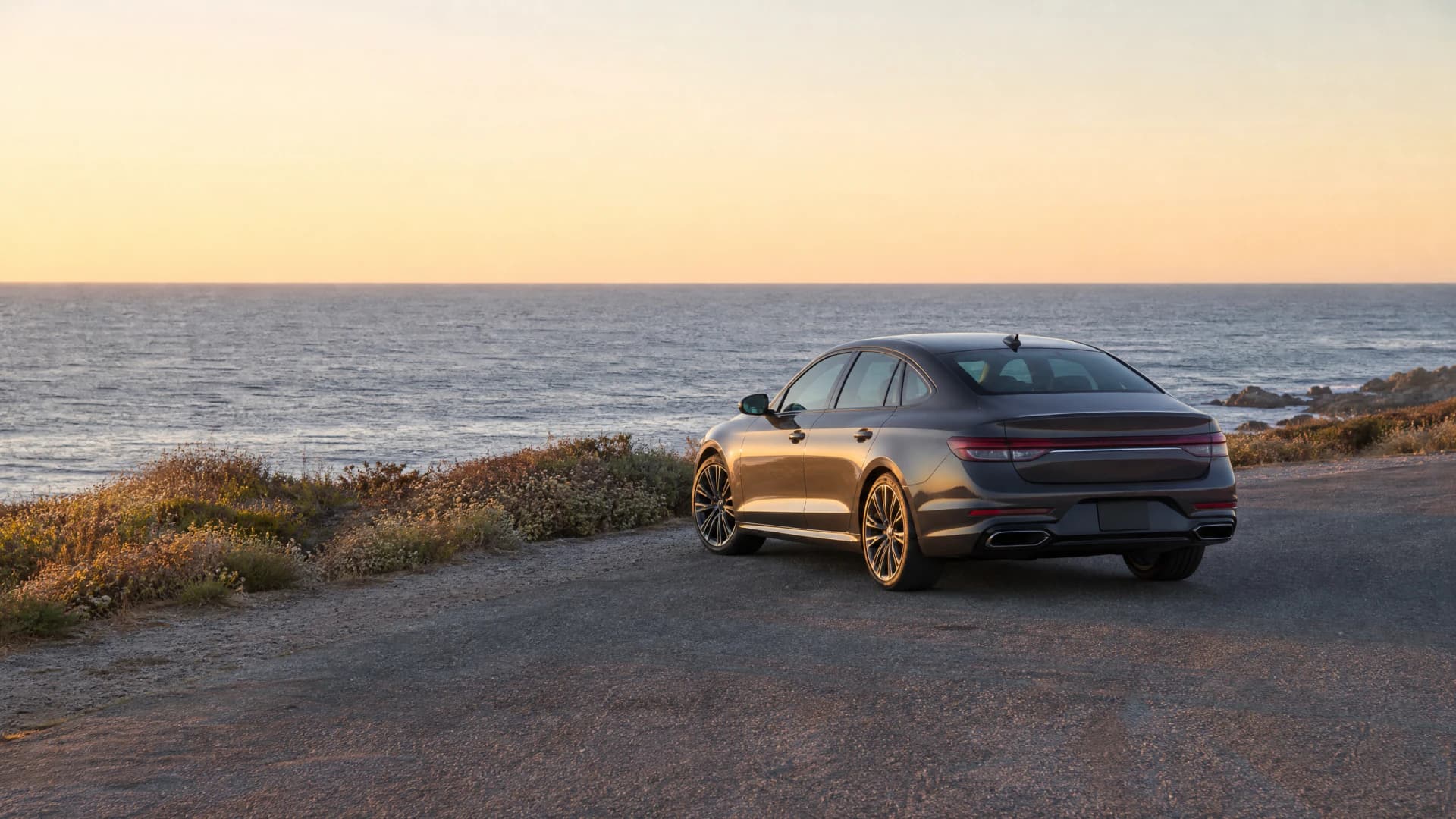
The remaining vehicle now carries the full undiscounted rate plus the policy's fixed costs, and comparing carriers on a single-vehicle policy resets the calculation entirely.
Related Articles






Low-Mileage and Usage-Based Programs for Single-Vehicle Households
Retirees who dropped a second car because they're no longer commuting or splitting household driving between two vehicles now drive far fewer annual miles on the remaining car. Most carriers offer low-mileage discounts for drivers logging under 7,500 or 10,000 miles per year, but those discounts are not automatically applied—they require you to report your mileage and request the adjustment. Some carriers verify mileage at renewal via odometer photos; others rely on self-reporting.
Usage-based programs go further. Geico's DriveEasy, Progressive's Snapshot, and Nationwide's SmartRide monitor actual driving behavior—mileage, time of day, braking patterns—and adjust your rate based on real usage rather than estimated annual miles. For a retiree now driving one car for errands, medical appointments, and occasional trips, these programs frequently produce double-digit percentage reductions. The trade-off is ongoing monitoring via a smartphone app or plug-in device, which some retirees find intrusive and others find worthwhile.
The discount is tied to enrollment and continuous participation. If you stop using the app or remove the device, the discount disappears at the next renewal. That makes usage-based programs a poor fit for drivers who want to set their policy and forget it, but a strong fit for those willing to maintain the monitoring relationship in exchange for measurable savings.
North Carolina does not mandate that insurers offer mature-driver or low-mileage discounts; carriers file these programs voluntarily. Ask each carrier explicitly whether they offer a low-mileage program, what the mileage threshold is, and whether enrollment requires telematics or simple self-certification. The answer varies by carrier, and the difference in premium can be significant.
19
Carriers Writing Auto in NC
Nineteen carriers write auto insurance in North Carolina across standard, preferred, and non-standard tiers. Not all offer mature-driver discounts or low-mileage programs, and eligibility varies by underwriting tier. Comparing carriers after dropping a second vehicle resets your rate entirely and surfaces options your current insurer may not offer.
NAIC carrier filings, North Carolina Department of Insurance

State-Approved Defensive Driving Course and Mature-Driver Discount Mechanics
North Carolina does not require insurers to offer a mature-driver discount. Carriers may file one voluntarily, and those that do set the percentage and eligibility rules in their own rate filings. Some tie the discount to age alone—typically 55 or 65 and older. Others require completion of a state-approved defensive driving course and renew the discount only when you submit a new certificate every three years.
The state maintains a list of approved course providers, available through the North Carolina Department of Insurance. Courses completed through providers not on that list do not qualify, even if the curriculum looks identical. Most approved courses are available online, take four to eight hours, and cost between $15 and $30, though the exact cost varies by provider and is not tracked by the state. Submitting the certificate to your carrier does not guarantee the discount will appear immediately; many carriers apply it only at the next renewal, and some require you to re-submit the certificate each renewal cycle even if it hasn't expired.
Carriers that do not file a mature-driver discount in North Carolina will not apply one regardless of your age or course completion. That makes comparing carriers essential: your current insurer may not offer the discount at all, while another writing in your state does. The discount percentage, where it exists, ranges widely—some carriers file 5 percent, others file 10 or more—but North Carolina law does not set a statutory floor, so the amount is entirely at the carrier's discretion.
Comparing Carriers After Consolidating to One Vehicle
Dropping a second car eliminates the multi-car discount, but it also frees you to compare carriers on a single-vehicle policy without the complexity of matching two vehicles' coverage. A carrier that priced your two-car household competitively three years ago may no longer be competitive for a one-car retiree household today, especially if you've aged into a new rating bracket or your mileage profile changed significantly.
Request quotes from at least three carriers writing in North Carolina. Provide identical coverage selections—liability limits, deductibles, uninsured motorist—and ask each carrier explicitly whether they offer a mature-driver discount, what the eligibility requirements are, and whether a low-mileage or usage-based program applies. The premium difference between carriers on identical coverage for a single vehicle frequently exceeds 20 percent, and that gap widens when one carrier offers programs your current insurer does not.

Take Action Now
Contact your current carrier first. Ask whether they applied a low-mileage discount to the remaining vehicle, whether a mature-driver discount is available, and what your annual mileage estimate is in their system. If that estimate reflects your old commute rather than your current driving, correct it and request the adjustment. Then request quotes from two other carriers writing in North Carolina—preferably one standard-tier and one preferred-tier—using the same coverage structure. Compare not just the premium but the discount programs each offers and the eligibility requirements for each. The carrier that priced your household best when you insured two cars may no longer be the right fit now that you're insuring one.
Coverage Fit on the Remaining Vehicle
Full coverage—comprehensive and collision—exists to protect the lender's interest in a financed vehicle and to cover replacement cost when a car is totaled or stolen. Once a vehicle is paid off, that coverage protects only your equity in the car. If the remaining vehicle is worth less than ten times your annual collision and comprehensive premium, or if replacing it out of pocket is financially manageable, dropping those coverages and carrying only liability insurance cuts your premium significantly. A retiree driving a 2015 sedan worth $6,000 and paying $600 annually for collision and comprehensive is spending 10 percent of the car's value each year to insure against a loss they could absorb.
Medical payments coverage and personal injury protection deserve separate scrutiny. Medicare covers most accident-related medical bills for North Carolina retirees, and medical payments coverage on an auto policy duplicates that. North Carolina does not require PIP, and most retirees can drop med-pay entirely without creating a coverage gap. That adjustment alone removes $100 to $200 annually from the premium. Uninsured motorist coverage, by contrast, remains critical: it covers your injury costs when the at-fault driver lacks insurance, a scenario Medicare does not address.
Get Your Free Quote
Get My North Carolina Retiree Auto Insurance QuoteFrequently Asked Questions
Why did my car insurance premium barely drop after I removed a second vehicle?
Removing the second vehicle eliminated the multi-car discount on the remaining car, which increased that vehicle's premium back to its undiscounted rate. The savings from dropping one vehicle's coverage were mostly offset by losing the discount on the car that stayed. Compare carriers now—your rate resets entirely on a single-vehicle policy.
Does North Carolina require insurers to offer a mature-driver discount?
No. North Carolina does not mandate a mature-driver discount; carriers file these programs voluntarily. Some offer an age-based discount, others require completion of a state-approved defensive driving course, and some offer no discount at all. Ask each carrier what they offer and how you qualify.
Should I keep full coverage on my remaining car if it's paid off?
It depends on the car's value and your ability to replace it out of pocket. If the vehicle is worth less than ten times your annual collision and comprehensive premium, or if you can absorb the replacement cost, dropping those coverages and keeping only liability cuts your premium significantly without creating meaningful financial risk.
How do I qualify for a low-mileage discount in North Carolina?
Ask your carrier whether they offer a low-mileage discount, what the annual mileage threshold is, and whether you need to self-certify or provide odometer verification. North Carolina does not mandate these programs, so availability and requirements vary by carrier. Enrollment is not automatic; you must request it.
Will Medicare cover my medical bills if I'm injured in a car accident?
Yes, Medicare covers most accident-related medical expenses for North Carolina retirees. Medical payments coverage on your auto policy duplicates that protection and can usually be dropped. Uninsured motorist coverage, however, addresses a different risk—injury caused by an at-fault driver without insurance—and remains important.