
Full Coverage with Paid-Off Cars — Charlotte, NC
Free to compare
When the Last Payment Clears
You made the final payment on your vehicle six months ago. The lien release arrived. You filed the updated title. But your insurance premium didn't change, because your agent never asked whether you wanted to reassess your coverage. Your collision and comprehensive premiums kept renewing at the same rate they carried when the bank required them, even though no lender has controlled your coverage decisions since the day the loan ended.
The payoff moment is when most Charlotte retirees miss the chance to match their coverage to how they actually use the vehicle now. You're driving a fraction of your working-year mileage. The car sits in a garage most days. Yet the collision premium still assumes you're commuting daily on I-277 in rush-hour traffic, because nobody told your carrier the loan ended and the usage pattern changed.
“The payoff moment is when most retirees miss the chance to match coverage to how they actually use the vehicle now.”

Keep Your North Carolina Coverage Right for Retirement
Get My North Carolina Retiree Auto Insurance Quote$50,000
NC Bodily Injury Minimum Per Person
North Carolina requires $50,000 bodily injury per person, $100,000 per accident, and $50,000 property damage. That liability floor applies whether your vehicle is financed or paid off; collision and comprehensive are optional the moment the lien releases.
N.C.G.S. Chapter 20 financial responsibility statute
What Full Coverage Actually Protects Once the Lender Exits
Collision covers damage to your vehicle when you hit another car or object, regardless of fault. Comprehensive covers theft, vandalism, hail, fire, and animal strikes. Both pay only up to your vehicle's actual cash value minus your deductible. If your 2015 sedan is worth $8,000 and you carry a $500 deductible, the maximum collision payout in a total loss is $7,500. If your annual collision premium is $420, you're paying 5.25% of the vehicle's value every year to protect an asset that depreciates whether you keep the coverage or not.
The lender required both coverages because the vehicle secured their loan. Once you own the car outright, the only entity exposed to the loss is you. The coverage decision becomes a pure cost-benefit judgment: does the collision and comprehensive premium cost less than the financial disruption of replacing the vehicle out of pocket if it's totaled or stolen?
That math bends sharply for retirees driving paid-off vehicles of moderate age. A $600 annual collision premium on a vehicle worth $6,000 crosses the threshold where most financial advisors suggest dropping the coverage and self-insuring the risk. If the vehicle were totaled, you'd receive $5,500 after a $500 deductible. Over two years, you paid $1,200 in premiums to protect a depreciating $6,000 asset. The breakeven assumes you total the car within five years; if you don't, the premiums exceeded the payout you never collected.
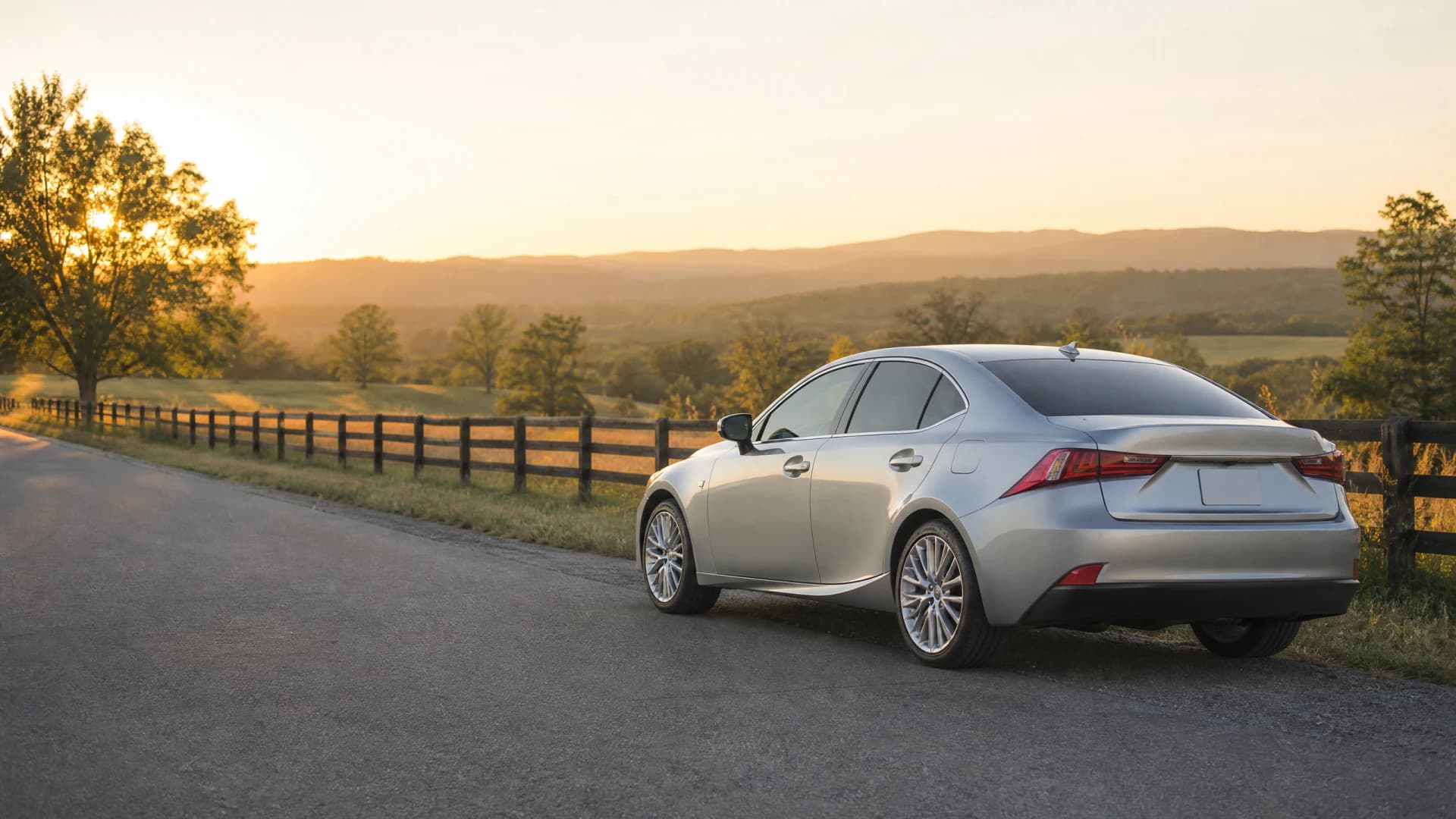
Most Charlotte retirees keep full coverage on paid-off vehicles because the renewal notice never flags that it became optional when the loan ended.
Related Articles

Full Coverage After Payoff in Wilmington NC
6/15/2026

Full Coverage After Payoff — NC Retirees
6/15/2026

Full Coverage After Payoff — Concord NC
6/15/2026

Full Coverage on Paid-Off Cars High Point NC
6/15/2026

Full Coverage on Paid-Off Cars Greensboro NC
6/15/2026

Full Coverage After Paid-Off Car Fayetteville
6/15/2026

How Charlotte Driving Patterns Change the Math
Collision risk correlates directly with miles driven and traffic density. If you drove 18,000 miles annually during your working years and now drive 6,000 miles in retirement, your exposure to at-fault accidents dropped by two-thirds. Yet your collision premium didn't drop proportionally unless you enrolled in a low-mileage or usage-based program and your carrier applied the discount. Most don't apply it automatically; you submit your odometer reading or install a mileage-monitoring device, and the carrier recalculates your rate.
Charlotte-specific risk also matters. Comprehensive claims for hail damage, catalytic converter theft, and deer strikes occur regardless of how many miles you drive. If you garage your vehicle overnight in a low-theft ZIP code and avoid driving during peak storm season, your comprehensive risk profile is lower than the county average. Some carriers offer usage-based programs that monitor not just mileage but time of day and braking events; retiring from a commute that put you on I-85 southbound at 7:30 AM five days a week materially lowers your risk score. Confirm whether your carrier applies those adjustments to your current policy or whether switching to a carrier offering senior-focused mileage programs cuts your premium enough to keep comprehensive coverage at a lower cost.
19
Carriers Writing Auto in NC
Nineteen carriers write auto insurance in North Carolina, including carriers offering mature-driver discounts and low-mileage programs. State law does not mandate a senior discount, so compare which carriers file one and how enrollment works.
NAIC carrier filings and state licensure records

The Liability Floor Stays Regardless of Vehicle Value
Dropping collision and comprehensive does not reduce your liability coverage. North Carolina requires $50,000 bodily injury per person, $100,000 per accident, and $50,000 property damage whether you drive a paid-off 2012 compact or a leased luxury sedan. That minimum protects the other driver and their property; it has no relationship to your vehicle's age, value, or loan status.
Many retirees carry liability limits well above the state minimum because retirement-era assets are exposed in an at-fault accident. If you own a home, hold investment accounts, or collect pension income, an at-fault crash resulting in $200,000 in medical bills and lost wages exposes those assets to judgment collection once your $100,000 per-accident limit exhausts. Dropping collision to eliminate a $400 annual premium while keeping $250,000/$500,000 liability limits is a coherent strategy; dropping liability to the state minimum to save $150 while keeping collision on a $5,000 vehicle inverts the risk hierarchy.
If your household net worth exceeds $300,000, confirm that your liability limits and umbrella policy align with your actual exposure. That analysis is independent of whether you keep collision on a paid-off car. The vehicle value determines collision coverage fit; your asset base determines liability limits.
When Comprehensive Stays and Collision Drops
Splitting the coverages is an option most Charlotte retirees don't realize exists. Comprehensive premiums typically cost one-third to one-half of collision premiums because comprehensive covers lower-frequency events. Theft, fire, hail, and animal strikes happen, but less often than at-fault accidents. If your comprehensive premium is $180 annually and your collision premium is $480, you can drop collision and keep comprehensive, cutting $480 from your annual cost while retaining coverage for total-loss events you can't control.
This structure fits retirees who drive infrequently, park in a garage, and have the liquidity to replace the vehicle if they cause an at-fault accident but want protection against theft or storm damage they didn't cause and can't predict. It also fits drivers whose vehicle value sits near the threshold where collision premiums no longer justify the coverage but whose ZIP code has elevated hail or theft risk that makes comprehensive worth keeping. Run the math separately for each coverage rather than treating full coverage as an all-or-nothing choice.

Compare Collision Costs Against Carriers Offering Senior Programs
Before you drop collision, confirm what your current carrier charges versus what a carrier offering mature-driver and low-mileage discounts would charge for the same coverage. State Farm, Nationwide, and Erie write in North Carolina and offer discounts tied to defensive driving course completion and reduced annual mileage. If your current carrier doesn't offer either and you're paying $600 annually for collision on a vehicle worth $9,000, switching to a carrier that cuts that premium to $320 through senior and mileage discounts keeps the coverage at a cost below the 10% threshold. You preserve the protection without paying the inflated rate your current carrier charges drivers who don't qualify for those programs.
Request quotes with collision at your current deductible, then at a higher deductible, then with collision removed entirely. Compare the annual premium difference against your vehicle's actual cash value and your household liquidity. If raising your deductible from $500 to $1,500 cuts your collision premium by $200 annually but you have $10,000 in accessible savings, the higher deductible makes sense. If dropping collision saves $450 annually and your vehicle is worth $6,500, you break even in 14 years of no at-fault accidents; most retirees replace their vehicle or stop driving before that window closes. The comparison decision is which path costs less over the time horizon you'll actually own the car.
The Premium-to-Value Threshold That Triggers Reassessment
Measure your vehicle's actual cash value using NADA or Kelley Blue Book trade-in figures, not retail. Insurers pay actual cash value in total-loss claims, which tracks closer to trade-in than private-party sale prices. Add your current annual collision premium and your comprehensive premium. Divide that total by the vehicle's value. If the result exceeds 10%, you're in the reassessment zone. A $7,000 vehicle with $750 in combined collision and comp premiums crosses that line; you're paying 10.7% annually to protect an asset whose value drops every year whether you file a claim or not.
The second threshold is deductible-to-premium ratio. If your deductible is $1,000 and your collision premium is $300 annually, you're paying premiums for three years to cover the amount you'd pay out of pocket in a single at-fault accident. Raising the deductible to $1,500 or $2,000 lowers the premium but narrows the gap between what you pay annually and what you'd self-fund in a claim. At that point, dropping collision entirely and reserving the annual premium amount in a vehicle-replacement fund often makes more financial sense for a retiree with a paid-off car.
Get Your Free Quote
Get My North Carolina Retiree Auto Insurance QuoteFrequently Asked Questions
Does North Carolina require collision and comprehensive coverage on paid-off vehicles?
No. North Carolina requires liability coverage ($50,000 bodily injury per person, $100,000 per accident, $50,000 property damage) whether your vehicle is financed or paid off. Collision and comprehensive are optional the moment the lien releases. Only a lender can mandate those coverages while the loan is active.
At what vehicle value should I drop collision coverage?
A conventional threshold is when your annual collision premium exceeds 10% of your vehicle's actual cash value. For a vehicle worth $7,000, that's $700 annually. Below that value, the premium cost approaches the maximum claim payout, and self-insuring the risk often costs less over the vehicle's remaining life.
Can I keep comprehensive coverage and drop collision?
Yes. The two coverages are independent. Comprehensive typically costs one-third to one-half of collision premiums and covers theft, fire, hail, and animal strikes. Many Charlotte retirees drop collision on paid-off vehicles but keep comprehensive to protect against total-loss events they can't control.
Will my premium drop automatically when I pay off my car?
No. Paying off your vehicle does not trigger an automatic premium reduction. Your carrier continues renewing collision and comprehensive at the same rate until you contact them to reassess coverage. Most retirees miss this step because the renewal notice doesn't flag that full coverage became optional when the loan ended.
Do senior or low-mileage discounts apply to collision premiums?
Yes, when the carrier offers them. Mature-driver discounts and low-mileage programs reduce your overall premium, including the collision portion. State Farm, Nationwide, and Erie write in North Carolina and offer both. Confirm whether your current carrier applies those discounts or whether switching cuts your collision cost enough to keep the coverage.
What happens to my liability coverage if I drop collision?
Nothing. Liability coverage is independent of collision and comprehensive. North Carolina's $50,000/$100,000/$50,000 minimum applies regardless of your vehicle's value or whether you carry collision. Dropping collision eliminates coverage for damage to your own vehicle in an at-fault accident; it does not reduce your liability protection for the other driver.