
Cheapest Car Insurance for Retirees — Gastonia, NC
Free to compare
You're Paying Commuter Rates for Retiree Driving
You opened your Gastonia renewal notice last week. The premium climbed another $40 every six months, though you haven't filed a claim in a decade and your mileage dropped from 15,000 annual miles to under 4,000 when you retired three years ago. Your carrier never mentioned a mature-driver discount. Your agent never asked whether you still commute. The policy treats you exactly like a full-time worker driving rush hour on I-85 every morning, and the rate reflects that fiction.
North Carolina does not mandate a mature-driver or senior-driver discount. Carriers file discount programs voluntarily, set their own amounts, and apply them only when you ask and submit documentation. If you never submit proof of a state-approved defensive driving course, you keep paying the rate filed for drivers who haven't completed one. The carrier won't remind you. The renewal notice won't prompt you. The system is procedurally passive: the burden of claiming the discount sits entirely with you.
“The mature-driver discount vanishes when your course certificate expires, and your carrier will not remind you to re-enroll.”

Keep Your North Carolina Coverage Right for Retirement
Get My North Carolina Retiree Auto Insurance Quote25
Carriers Writing in NC
Twenty-five carriers write auto insurance in North Carolina. Most file mature-driver and low-mileage discounts, but each sets eligibility and amounts independently because the state does not mandate a floor percentage. Compare which carriers reward reduced mileage and completed courses rather than assuming all offer the same terms.
North Carolina Department of Insurance carrier licensure records
State-Approved Course vs Age-Based Discount
North Carolina carriers structure mature-driver discounts two ways, and most Gastonia retirees conflate them. An age-based discount applies automatically at a threshold age, usually 55 or 65, without any action required. A course-based discount requires completion of a state-approved defensive driving course and submission of the certificate to your carrier before renewal. The two are separate programs. Some carriers offer only one. Some offer both but stack them. Some cap the combined total.
The course-based discount is the larger of the two when both exist, but it expires. Most certificates remain valid for three years. When the certificate expires, the discount disappears at the next renewal unless you complete a refresher course and submit a new certificate. Your carrier will not notify you that the discount lapsed. You will see the premium increase and wonder why. The mechanism is your responsibility to track.
Gastonia retirees who completed a course five years ago and never re-enrolled are paying full rates today. The original discount applied for three years, then vanished. No letter. No email. Just a higher renewal premium with no claims to explain it. If you completed a course more than three years ago, check whether your current policy still reflects it.
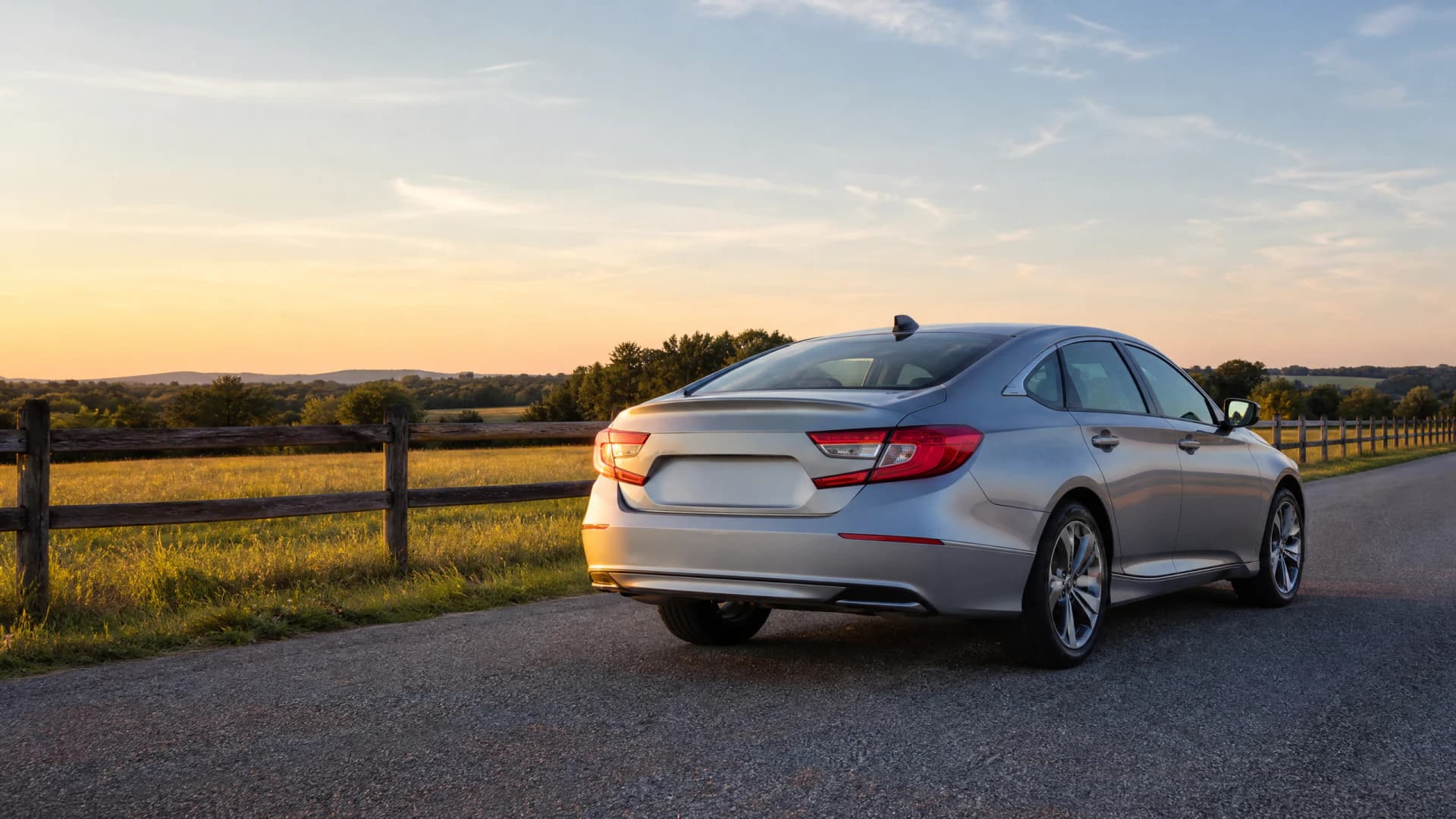
Your current carrier never applied the mature-driver discount because you never submitted the course certificate, or the certificate expired and you never re-enrolled for the refresher.
Related Articles







Medical Payments Coverage and Medicare Coordination
Most Gastonia retirees carry medical payments coverage because they carried it for decades. Medicare changes the math. Medical payments coverage pays your medical bills after an accident regardless of fault, up to the policy limit. Medicare also pays your medical bills after an accident. The two do not stack the way you think they do.
Medicare pays first. Medical payments coverage pays only what Medicare does not cover: copays, deductibles, and services Medicare excludes. If your MedPay limit is $5,000 and your accident-related bills total $8,000, Medicare pays most of the $8,000, MedPay pays your Part B deductible and any copays up to the $5,000 limit, and you pay the rest. The $5,000 MedPay limit does not add $5,000 of new protection; it fills Medicare's gaps.
For most Gastonia retirees on Medicare, a $1,000 or $2,000 MedPay limit covers the gaps without paying for redundant coverage. Dropping from $5,000 to $1,000 cuts the MedPay premium by half and loses almost no actual protection. Compare your current limit against your out-of-pocket Medicare maximum before your next renewal.

Full Coverage on a Paid-Off Vehicle
Your 2015 Honda Accord is paid off. You have carried full coverage since you bought it new in 2015. The loan disappeared four years ago. The coverage stayed. No lender requires it now, but you never questioned it because the term full coverage sounds like responsible protection. It is not a coverage type. It is shorthand for collision plus comprehensive, and the decision to keep it is a financial judgment call about your own asset, not a responsibility question.
Collision coverage pays to repair your vehicle after an accident you cause, minus your deductible. Comprehensive pays for theft, weather damage, and vandalism, minus your deductible. If your 2015 Accord is worth $6,000 and your collision deductible is $1,000, the maximum you can collect from a collision claim is $5,000. If your collision premium is $400 annually, you are paying $400 for the chance to collect up to $5,000, and the math only works if you total the vehicle.
Many Gastonia retirees keep collision and comprehensive because they want the peace of mind. That is a legitimate choice. Others drop collision, keep comprehensive, and self-insure the collision risk because theft and weather are likelier than a total-loss crash when you drive 3,000 miles a year. The break-even threshold conventionally sits around ten percent: if your combined collision and comprehensive premium exceeds ten percent of your vehicle's value annually, the coverage costs more than it protects. Run that calculation with your current premium and your vehicle's actual value before the next renewal.
$50,000
NC Bodily Injury Minimum Per Person
North Carolina requires $50,000 bodily injury per person, $100,000 per accident, and $50,000 property damage. Most Gastonia retirees with retirement assets exceeding $100,000 carry higher liability limits because the minimum leaves personal assets exposed in an at-fault serious-injury crash.
N.C.G.S. § 20-279.21
Liability Limits and Retirement Assets
North Carolina's minimum liability limits protect the other driver up to $50,000 per person injured and $100,000 per accident. If you cause a crash that seriously injures two people and their combined medical bills total $200,000, your policy pays the first $100,000 and you are personally liable for the remaining $100,000. The injured parties can pursue your retirement accounts, your home equity, and any other assets you own to collect that $100,000 judgment.
Retirees often carry more assets than working-age drivers and lower income to recover from a judgment. If your retirement accounts, home equity, and savings total $300,000, carrying only the $100,000 per-accident minimum exposes $200,000 of your assets in a two-injury crash. Increasing liability limits to $250,000 per person and $500,000 per accident costs less than most Gastonia retirees expect because liability premiums scale slowly: doubling your coverage rarely doubles your premium. The increment from minimum to $250,000/$500,000 typically adds $80 to $150 annually depending on your carrier and your driving record.

Compare Carriers That Reward Your Profile
You now know which discounts exist, how they expire, and which coverage still earns its cost. The next step is comparing Gastonia carriers that file programs rewarding reduced mileage and mature-driver course completion. Your current carrier may not be the one that treats your profile most favorably. Geico, Progressive, State Farm, Nationwide, and Travelers all write in North Carolina and all file mature-driver and low-mileage programs, but the amounts differ and the eligibility thresholds differ.
Request quotes from at least three carriers. Confirm whether each applies an age-based discount automatically and whether each offers a course-based discount on top of it. Ask what the annual mileage threshold is for their low-mileage program and whether they use telematics, odometer reporting, or self-reporting. Ask whether the mature-driver course certificate expires and how far in advance of renewal you must submit a refresher certificate to avoid a lapse. These procedural details determine whether the quoted discount survives past the first renewal.
Most Gastonia retirees discover that switching carriers cuts their premium more than stacking every discount their current carrier offers. The mature-driver discount your current carrier files might be five percent. A competitor might file ten percent and also reward mileage under 5,000 annual miles while your current carrier's threshold sits at 7,500. The combination of a higher discount percentage and a lower mileage threshold often exceeds the loyalty discount your current carrier applies after twenty years. Compare the total premium with all applicable discounts, not the discount percentages in isolation.
Which Gastonia Carriers Reward Reduced Mileage
Geico, Progressive, and Nationwide operate usage-based telematics programs that track mileage via smartphone app or plug-in device. If your annual mileage stays under 7,500 miles, these programs usually deliver the steepest discount. State Farm offers a mileage-based program but structures it differently: you report odometer readings at policy inception and renewal rather than continuous tracking. Allstate and Travelers file low-mileage discounts tied to annual mileage brackets you self-report, but verification happens at claim time, not enrollment.
The procedural difference matters. Telematics programs require you to install an app and grant location permissions. Odometer-reporting programs require you to photograph your odometer twice a year and upload the images through the carrier portal. Self-reported programs require nothing up front but expose you to claim-denial risk if your actual mileage exceeded what you reported. Choose the verification method you will actually follow through renewal after renewal, not the one promising the largest discount percentage on the quote screen.
Get Your Free Quote
Get My North Carolina Retiree Auto Insurance QuoteFrequently Asked Questions
Do all North Carolina car insurance carriers offer a mature-driver discount?
No. North Carolina does not mandate a mature-driver or senior-driver discount, so carriers file them voluntarily. Most major carriers writing in NC offer one, but the discount amount and eligibility requirements differ by carrier. Some require completion of a state-approved defensive driving course; others apply an age-based discount automatically at 55 or 65.
How long does a North Carolina mature-driver course certificate stay valid?
Most North Carolina defensive driving course certificates remain valid for three years. When the certificate expires, the discount disappears at your next renewal unless you complete a refresher course and submit a new certificate to your carrier before the renewal date. Your carrier will not notify you that the certificate expired.
Does Medicare replace medical payments coverage on my car insurance?
No, but Medicare pays first. Medical payments coverage on your auto policy pays only what Medicare does not cover: copays, deductibles, and excluded services. For most retirees on Medicare, a $1,000 to $2,000 MedPay limit covers the gaps without paying for redundant protection. Higher limits rarely add meaningful coverage once Medicare is your primary health insurer.
Should I drop collision coverage on my paid-off car?
It depends on your vehicle's value and your collision premium. A conventional threshold sits around ten percent: if your collision premium exceeds ten percent of your vehicle's current value annually, the coverage costs more than it protects. Many Gastonia retirees drop collision and keep comprehensive because theft and weather are likelier than a total-loss crash when annual mileage stays under 5,000 miles.
Which Gastonia carriers offer the best low-mileage discounts for retirees?
Geico, Progressive, and Nationwide operate usage-based telematics programs that typically deliver the steepest discounts when annual mileage stays under 7,500 miles. State Farm offers a mileage-based program using odometer reporting at renewal. Allstate and Travelers file low-mileage discounts tied to self-reported annual mileage brackets. Compare the verification method and the mileage threshold, not just the discount percentage.
How much does it cost to increase liability limits in North Carolina?
Increasing from the state minimum ($50,000/$100,000/$50,000) to $250,000 per person and $500,000 per accident typically adds $80 to $150 annually, depending on your carrier and driving record. Liability premiums scale slowly, so doubling your coverage rarely doubles your cost. Most Gastonia retirees with retirement assets exceeding $100,000 carry higher limits because the minimum leaves personal assets exposed in a serious at-fault crash.