
Best Car Insurance for Retirees — Winston-Salem, NC
Free to compare
The Premium That Didn't Drop When Your Mileage Did
You retired six months ago. The daily commute to Forsyth Tech or the Research Park ended. Your Camry now logs eight thousand miles a year instead of fifteen, mostly errands within Winston-Salem and the occasional trip to visit family in Greensboro. Your premium stayed exactly where it was. No discount appeared at renewal. Your agent never mentioned one.
That's the structural gap North Carolina retirees hit hardest. The state doesn't mandate a mature-driver discount. Carriers file them voluntarily or don't file them at all. The ones that do require you to ask, submit documentation, and often re-enroll every renewal cycle. This article walks which carriers writing in Winston-Salem actually offer mature-driver and low-mileage programs, how you qualify, and which coverage decisions change once your car is paid off and lightly driven.
“Your carrier won't tell you a mature-driver discount exists unless you ask—most retirees pay the higher rate for years.”
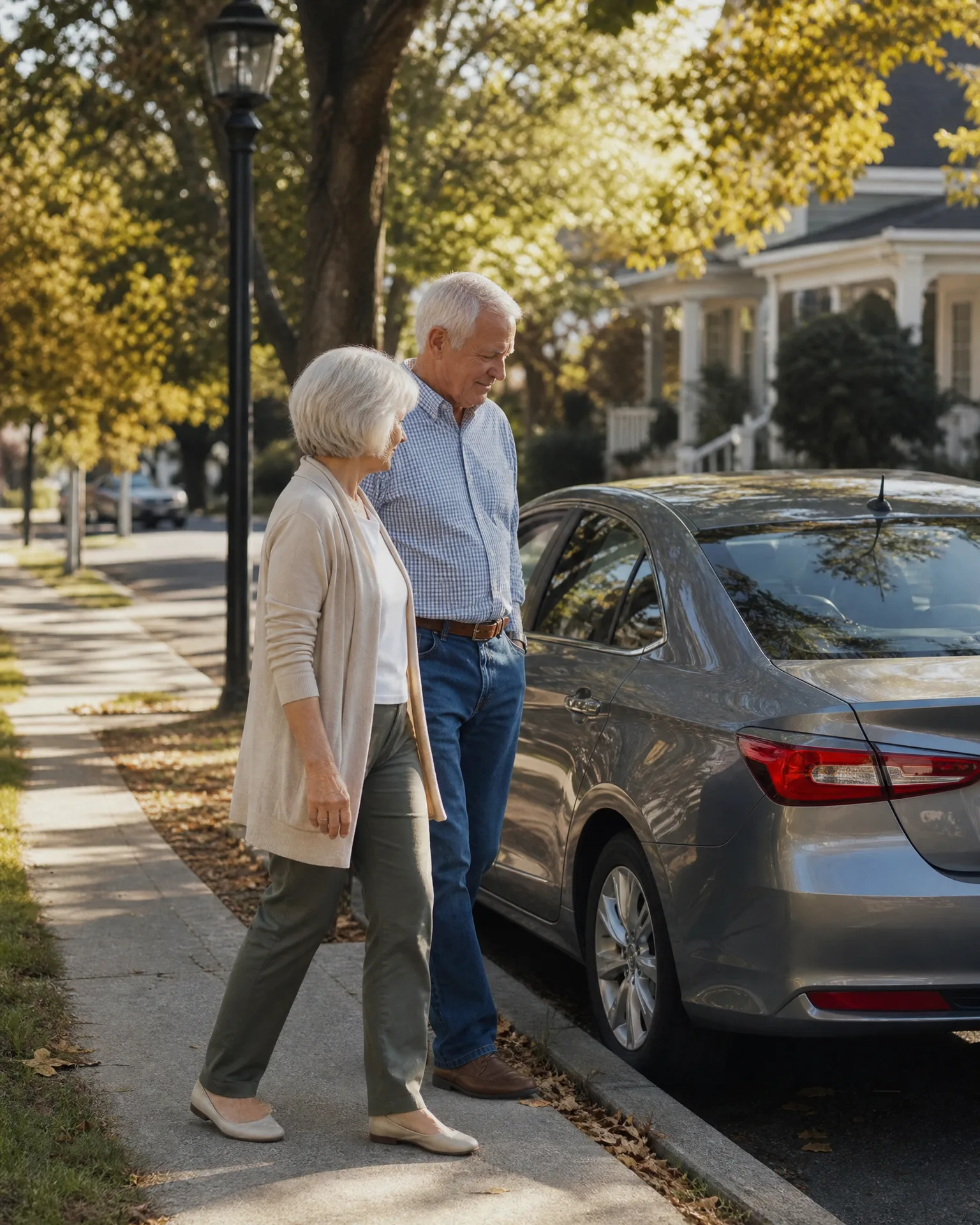
Keep Your North Carolina Coverage Right for Retirement
Get My North Carolina Retiree Auto Insurance Quote19 carriers
Writing Auto Policies in NC
Nineteen carriers hold active North Carolina auto insurance licenses and write policies statewide, including Winston-Salem. Not all offer mature-driver or low-mileage discounts. Comparing which ones do is the comparison step most retirees skip.
NC Department of Insurance carrier database
What North Carolina Law Actually Requires
North Carolina General Statute § 58-36-30 governs rate filings and discount structures. It does not require carriers to offer a mature-driver or defensive-driving-course discount. That means eligibility, discount amounts, and renewal rules vary entirely by carrier filing. One carrier may offer ten percent off for completing an approved course. Another may offer nothing. A third may offer an age-based discount starting at fifty-five with no course required.
The practical consequence: shopping carriers means verifying discount availability first, not comparing premiums in a vacuum. A quoted rate from a carrier that doesn't offer the mature-driver discount you qualify for is already incorrect. The corrected rate only appears after you ask which discounts apply and submit proof. Most comparison tools don't surface that question until after you've already clicked through.

Your carrier won't tell you a mature-driver discount exists unless you ask. Most retirees pay the higher rate for years because the course certificate never reaches the underwriting file.
Related Articles

Cheapest Retiree Insurance Winston-Salem NC
6/15/2026

Cheapest Car Insurance Winston-Salem NC
6/15/2026

Senior Driver Insurance Winston-Salem NC
6/15/2026

Best Car Insurance for NC Retirees
6/15/2026

Cheapest Insurance Retired Couples Winston-Salem
6/15/2026

Cheapest Retiree Auto Insurance Wilmington NC
6/15/2026

How Low-Mileage and Usage-Based Programs Work for Retirees
Low-mileage discounts operate in one of two ways. Traditional low-mileage programs ask you to estimate your annual mileage at renewal and apply a discount tier based on that estimate. The carrier may verify your odometer reading at claim time or renewal audit. Usage-based programs—Progressive Snapshot, Nationwide SmartRide, Allstate Drivewise—install a telematics device or smartphone app that logs actual mileage and driving behavior continuously. The discount adjusts based on real data, not an estimate.
For a retiree driving under ten thousand miles annually, the telematics pathway often produces a larger discount than the estimate-based tier, especially if your driving patterns are predictable and avoid rush-hour density. The tradeoff: you're sharing trip data with the carrier. Some retirees object to the monitoring; others treat it as the most accurate way to prove they no longer drive commuter miles. Ask your current carrier which pathway it offers and whether the telematics program requires re-enrollment every six or twelve months.
The failure mode competing pages omit: estimate-based low-mileage discounts disappear if your renewal odometer reading exceeds the declared threshold. A single road trip to Florida can push you over the limit. The telematics device captures that trip but weights it against eleven months of local errands, so the discount usually survives. If you take one long trip per year, the usage-based route handles it more fairly than the annual estimate.
$50,000
NC Minimum Bodily Injury Per Person
North Carolina requires fifty thousand dollars bodily injury liability per person, one hundred thousand per accident, and fifty thousand property damage. Retirees with retirement assets exceeding those thresholds face personal exposure in an at-fault accident. The minimum is a floor, not a fit.
N.C.G.S. § 20-279.21

Coverage Fit Decisions Once the Car Is Paid Off
Your 2015 Camry is paid off. It's worth roughly six thousand dollars in trade-in condition. You're carrying five-hundred-dollar-deductible collision and comprehensive coverage that costs seventy dollars a month combined. The question is whether that seventy dollars buys meaningful protection or just funds three low-probability payouts over the car's remaining useful life.
The conventional threshold: if the vehicle's actual cash value falls below ten times your annual collision and comprehensive premium, the coverage stops earning its cost. Six thousand dollars in value against eight hundred forty dollars in annual premium sits right at the boundary. One claim pays out; two claims break even; three exhaust the car's value. The judgment call depends on whether you can absorb a six-thousand-dollar replacement cost without financial strain and whether you're comfortable self-insuring that risk. There's no actuarial right answer here—it's a cash-flow and risk-tolerance decision.
What does stay non-negotiable: liability coverage. Your retirement accounts, your home equity, and any other assets above North Carolina's fifty-thousand-dollar-per-person minimum remain exposed in an at-fault accident. Dropping collision on a paid-off car is a judgment call. Dropping liability limits below what you own is a decision that puts decades of accumulated wealth at risk to save a small percentage of your total premium.
Medical Payments Coverage and Medicare Coordination
North Carolina does not require personal injury protection. Most carriers offer medical payments coverage as an optional add-on, typically in increments of one thousand to five thousand dollars. The question retirees face: does MedPay duplicate Medicare, or does it fill a gap Medicare leaves open?
Medicare Part B covers accident-related injuries after you meet your annual deductible and coinsurance. MedPay pays immediately, without a deductible, and coordinates as secondary coverage. If your accident results in emergency-room treatment, ambulance transport, or follow-up care that hits your Part B deductible early in the year, MedPay covers that out-of-pocket cost. If you're already past your deductible when the accident occurs, MedPay adds little. The value depends on your annual healthcare spending pattern and whether you carry a Medicare Supplement plan that already covers Part B cost-sharing. Ask your carrier how MedPay coordinates with Medicare specifically—generic answers about health insurance miss the Medicare-specific mechanism.

The Next Step: Compare Carriers Who Actually Serve This Profile
Start with your current carrier. Call or log into your account and ask three questions directly: does the carrier offer a mature-driver discount, does it offer a low-mileage or usage-based program, and do you currently have both applied to your policy. If the answer to question three is no, ask what documentation you need to submit and whether the discount requires annual re-enrollment. Get the answer in writing or document the call.
Then compare against at least two other carriers writing in Winston-Salem who file mature-driver programs in North Carolina. Request quotes that include the discount from the start, not as an add-on you have to remember to ask for later. Verify the mileage tier or telematics structure each uses. Compare the final premium after all discounts apply, and compare the coverage structure—liability limits, MedPay options, and whether collision still makes sense for your vehicle's current value. The decision isn't which carrier charges the least in a vacuum; it's which combination of discount eligibility, program structure, and coverage fit matches where you actually are now.
Which Winston-Salem Carriers Offer Mature-Driver Discounts
State Farm, Nationwide, Progressive, and Geico all write standard-tier auto policies in Winston-Salem. State Farm and Nationwide historically file age-based or course-completion discounts in North Carolina, but the specific percentage and eligibility age are set by internal filing and change periodically. Progressive and Geico offer telematics-based programs that can capture mileage reductions directly rather than relying on self-reported annual mileage. Both pathways exist; ask which your current carrier supports.
Preferred-tier carriers including USAA, Erie, Amica, and Auto-Owners also write in the state. USAA restricts eligibility to military-affiliated households but often files competitive mature-driver programs for qualifying members. Erie and Amica operate through independent agents rather than offering online quotes directly, so discount verification happens during the agent conversation. If you're comparing more than two carriers, request the mature-driver and low-mileage discount amounts in writing before committing to a quote—verbal estimates at the agent level sometimes don't match the underwriting file.
Get Your Free Quote
Get My North Carolina Retiree Auto Insurance QuoteFrequently Asked Questions
Does North Carolina require car insurance companies to offer a senior discount?
No. North Carolina General Statute § 58-36-30 does not mandate a mature-driver or senior discount. Carriers file them voluntarily, so discount availability, amounts, and eligibility rules vary entirely by carrier. Verify at quote time which carriers offer one and what you need to qualify.
How do I qualify for a mature-driver discount in Winston-Salem?
Qualification depends on the carrier. Some offer an age-based discount starting at fifty-five or sixty-five with no course required. Others require completion of a state-approved defensive driving course and proof of completion submitted to the underwriting file. Ask your carrier which pathway it uses and whether the discount renews automatically or requires re-enrollment.
Will my car insurance premium go down automatically when I retire?
No. Carriers do not automatically apply mature-driver or low-mileage discounts at renewal. You must ask which discounts you qualify for, submit required documentation such as a course certificate or mileage estimate, and verify the discount appears on your policy declaration. Most retirees pay the same rate for months or years because they never initiated the request.
Should I drop full coverage on my paid-off car?
It depends on the vehicle's value and your ability to absorb a replacement cost. If your car's actual cash value is less than ten times your annual collision and comprehensive premium, the coverage often stops earning its cost. A six-thousand-dollar car costing eight hundred annually in physical-damage coverage sits at the judgment-call threshold. Liability coverage remains non-negotiable regardless of vehicle value.
How does medical payments coverage work with Medicare?
MedPay coordinates as secondary coverage after Medicare Part B. Medicare covers accident injuries after your annual deductible and coinsurance; MedPay pays your out-of-pocket costs immediately. The value depends on whether you've already met your Part B deductible when the accident occurs and whether a Medicare Supplement plan already covers cost-sharing. Ask your carrier how it coordinates with Medicare specifically.
Which Winston-Salem car insurance carriers offer the best rates for retirees?
Rate comparisons depend on discount eligibility, not base premiums. State Farm, Nationwide, Progressive, Geico, USAA, Erie, and Amica all write policies in Winston-Salem. Which offers the lowest final premium depends on whether you qualify for each carrier's mature-driver and low-mileage programs and whether those discounts are already applied. Compare quoted rates after all applicable discounts, not before.